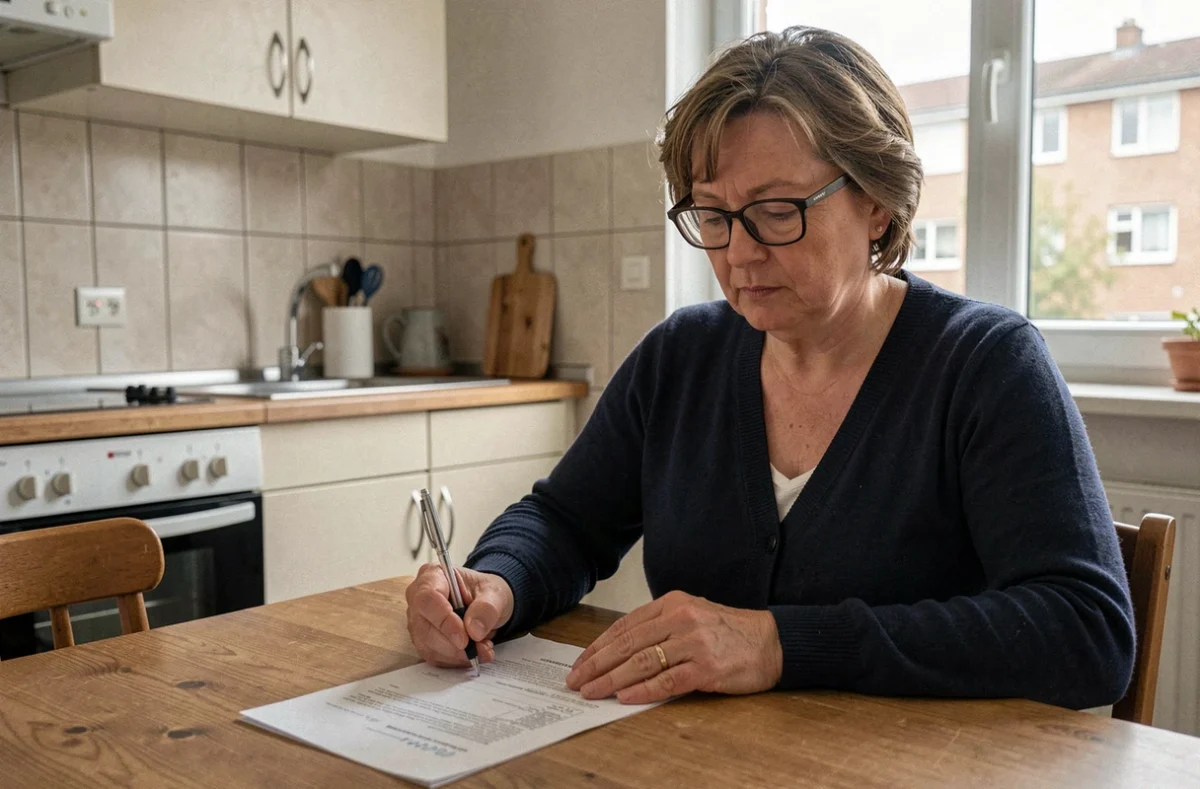
A tenant signs their lease in a housing unit managed by a social housing company and discovers a clause for a duration of three months, renewable by tacit agreement. The first reaction is often concern: can the landlord terminate the lease every three months? The answer depends less on the clause itself than on the actual legal framework of the housing. Understanding the regulations for the 3-month lease in social housing first requires distinguishing between classic social housing and intermediate housing.
PLI-LLI or classic HLM: the legal framework makes all the difference
The mention of a “renewable 3-month lease” is frequently encountered in contracts concerning housing financed under PLI (intermediate rental loan) or LLI (intermediate rental housing). These units are often managed by social housing companies, which creates confusion.
A PLI-LLI unit is not social housing in the strict sense: it falls under intermediate housing, intended for households whose income exceeds the limits of social housing but remains insufficient for the free market.
This distinction has a direct consequence on the rental contract. A classic HLM lease is for an indefinite duration with tacit renewal. The social landlord can only terminate the lease in very specific cases. In contrast, an intermediate unit managed by a social housing organization may be subject to different contractual rules, including a short initial duration with automatic renewal.
Before worrying about a three-month clause, one should check the type of financing of the housing. This information is found in the contract, usually on the first page or in the specific conditions. The regulations for the 3-month lease in social housing vary depending on whether the housing falls under social or intermediate housing, and this verification is the first reflex to adopt.

Indefinite HLM lease: what the law really protects
For classic social housing, the lease is governed by the law of July 6, 1989, supplemented by specific provisions for the HLM sector. The contract is concluded for a duration of indefinite length with the right to remain in the premises.
In practice, the social landlord cannot terminate the tenant’s lease at the end of a quarter. The tenant retains their right to occupy as long as they meet their obligations: payment of rent, peaceful use of the housing, and obtaining home insurance. The only grounds for termination initiated by the landlord are strictly regulated by law.
Obligations that condition the right to remain in the premises
- Regular payment of rent and charges, including in the event of annual revision according to the rent reference index (IRL)
- Effective occupation of the housing as a primary residence, without unauthorized subletting
- Obtaining and maintaining home insurance covering rental risks
- Compliance with income conditions at the time of initial allocation (subsequent exceedances may lead to a surcharge, but not automatic termination)
If a three-month clause appears in a lease for classic social housing, it does not carry the weight that the tenant fears. It may correspond to a notice period for the tenant or to a clumsy formulation of tacit renewal, but it does not allow the landlord to unilaterally terminate the contract every quarter.
Three months renewable: when the clause has a real effect
The situation is different for an intermediate housing unit managed by a social housing organization. In this case, the lease may indeed provide for an initial duration of three months with automatic renewal. The question then arises: can the landlord refuse renewal?
In the case described on legal forums, the contract mentions a tacit renewal “unless terminated by either party.” However, the following article of the same contract only details the termination initiated by the tenant. This asymmetry is common and deserves attention.
What to check in the contract
One should first read the general conditions attached to the lease, not just the specific conditions. It is in these annexes that the termination procedures by the landlord, if they exist, are specified. A contract that mentions the tenant’s termination without specifying the landlord’s termination conditions creates an ambiguity that the tenant can leverage.
A vacant residential lease subject to the 1989 law imposes a minimum duration of three years for an individual landlord and six years for a legal entity. A social housing organization is a legal entity. If the housing falls under the scope of this law, a duration of three months would be contrary to legal provisions, and the clause could be considered as unwritten.
Challenging a short duration clause in an HLM lease
When one suspects that a renewable three-month clause is incompatible with the legal framework of the housing, several concrete actions are possible.
The first is to precisely identify the financing of the housing. One can inquire with the landlord by registered mail, asking for the type of agreement (PLUS, PLAI, PLS, PLI, LLI). The response determines the applicable regime.
If the housing falls under the conventioned social housing sector, the three-month clause cannot justify a termination by the landlord. One can approach the departmental conciliation commission before any legal action. This process is free and often clarifies the situation without going through a court.
For intermediate housing, the margin of maneuver depends on the contract itself and its compliance with the 1989 law. A contract that does not explicitly provide for the conditions of termination by the landlord works in favor of the tenant, as the silence of the contract does not create a right to unilateral termination.
The three-month renewable lease in social housing is not a trap in itself, but a signal that requires checking the exact status of the housing. In most cases, the tenant enjoys much broader protection than what the displayed duration suggests. The quarterly clause most often corresponds to a notice period or to a formulation inherited from old contract models, without consequence on the right to remain in the premises.