Leisure practices are fragmented according to age, budget, living location, and the degree of flexibility sought. Autonomous physical activities are clearly progressing outside traditional structures, while classic cultural formats are undergoing profound changes.
Active leisure without registration: walking and autonomous practices at the forefront
The INJEP-CRÉDOC 2025 barometer places walking ahead of running and cycling among the most widespread sports practices in France. This ranking is not surprising: walking requires neither expensive equipment nor a fixed time slot. It can be done alone, with family, or with friends, in urban areas as well as in nature.
This data reveals a broader shift. Regular sports practice is increasing, but especially outside clubs and associations. The French prefer flexible formats, without annual commitment. A jog in the park, a yoga session followed on an app, a bike ride on Sunday morning: these active leisure activities fit into variable schedules. For those looking to access leisure on Avenue du Net, options abound in this logic of flexibility.
The available data does not allow us to conclude that traditional clubs are declining in absolute terms. However, the share of autonomous practitioners is increasing faster than that of licensed members. This gap has concrete implications for anyone seeking a leisure activity: it is often better to start with a free format before committing to a structure.

Cultural outings in 2025: a decline that hides disparities
Cinema, museums, live performances: several segments of cultural attendance are experiencing tensions. The reasons cited mix budget constraints, saturation of digital offerings, and avoidance of crowded places.
The gaps between audiences remain significant. Cultural practices vary greatly according to age and social level. Young adults are more inclined towards short formats (immersive exhibitions, escape games, occasional workshops) while older audiences remain attached to live performances and traditional museum visits.
The case of hybrid activities between culture and entertainment
Escape games and creative workshops (cooking, painting, pottery) occupy an intermediate ground. They combine a cultural or technical dimension with a playful aspect. Their success relies on a format of a few hours, without commitment, often bookable online with a simple ticket.
In Paris, the supply of workshops by district has intensified in recent years. This phenomenon extends beyond the capital: medium-sized cities now offer workshops to test artisanal or culinary techniques over half a day. Occasional leisure with high experiential value is gradually replacing subscriptions.
Home leisure and digital tools: a balance is being established
The opposition between digital leisure and physical leisure is losing its relevance. Recent sources describe a hybrid model: a guided sports session via an app in the morning, an outdoor walk in the afternoon, an online language or music class in the evening. This mix reflects an organization of free time in short blocks rather than by themed days.
Several categories of home leisure are gaining popularity without requiring a significant budget:
- Online courses (languages, instruments, drawing) allow for progress at one’s own pace, with sessions of 20 to 45 minutes suitable for parents as well as working individuals
- Creative cooking goes beyond the simple daily meal: advanced baking or home fermentation recipes attract an audience seeking tangible results
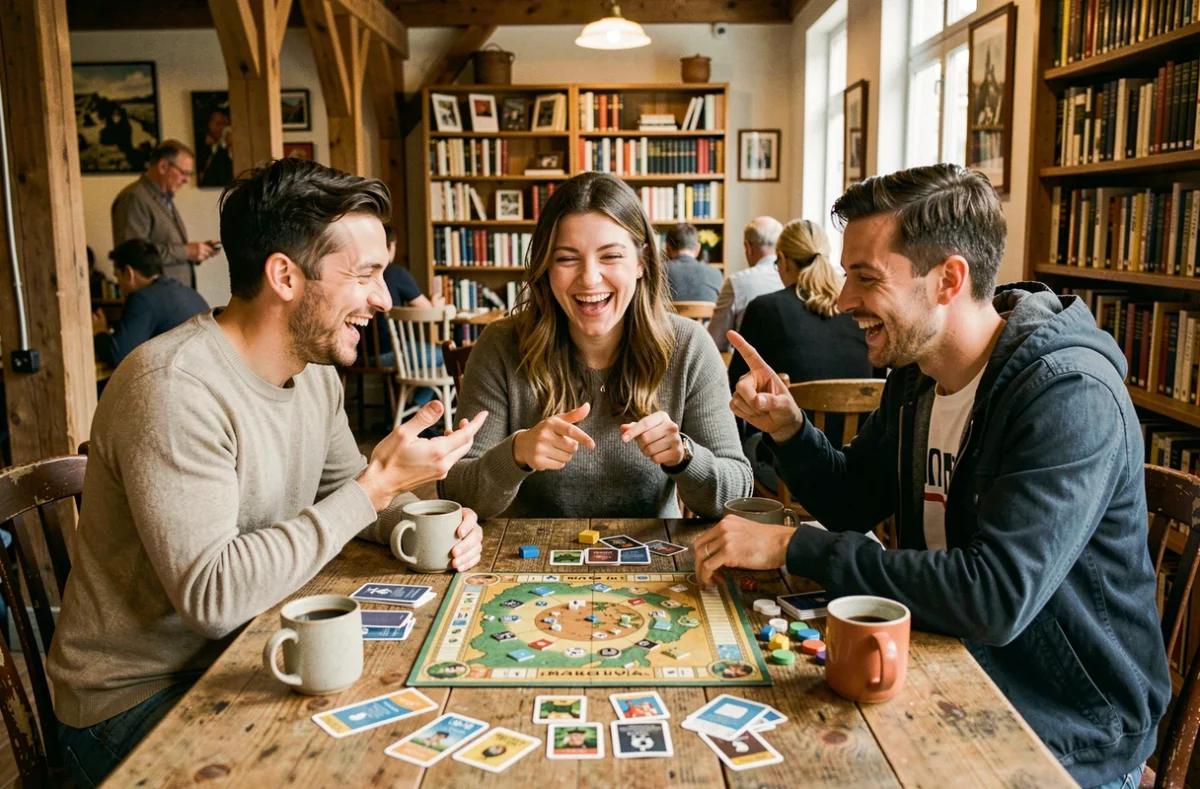
- Modern board games, far beyond Monopoly, offer cooperative or narrative mechanics that renew evenings with friends or family with children
The home is no longer a retreat but an active leisure space. This evolution extends the digital practices adopted in recent years, without eliminating the need to go out.
Choosing a suitable leisure activity: criteria rarely taken into account
Most leisure guides present lists of activities without prioritizing them according to concrete criteria. A pottery workshop in Paris and a forest hike do not meet the same constraints of time, budget, and logistics.
Three filters allow for effective sorting:
- The desired regularity: a daily leisure activity (reading, walking, meditation app) does not require the same organization as a monthly outing (visit, escape game, occasional class)
- The number of participants: some activities work solo (running, painting), while others require a group (team sports, board games, team action)
- The technical entry threshold: learning an instrument takes months before one feels pleasure, whereas a bike ride provides immediate satisfaction
A leisure activity that poorly matches one’s real constraints will be abandoned within a few weeks. Field feedback varies on this point, but one observation often recurs: people who start with short, non-committal formats maintain their practice longer than those who directly enroll in a structured setting.
The trap of option overload
Faced with the proliferation of online offers (tickets, reservations, subscriptions), the risk is to flit about without delving deeper. Testing an activity for at least four to five sessions before judging remains a simple guideline. A leisure activity that provides a sense of progression, even modest, is more likely to last than a spectacular but occasional entertainment.
Free time is not just a checklist of ideas to tick off. Recent data shows that the French are building hybrid, flexible practices adapted to their daily lives. The best leisure activity is the one that fits into a real schedule, not the one that shines the most on a brochure.