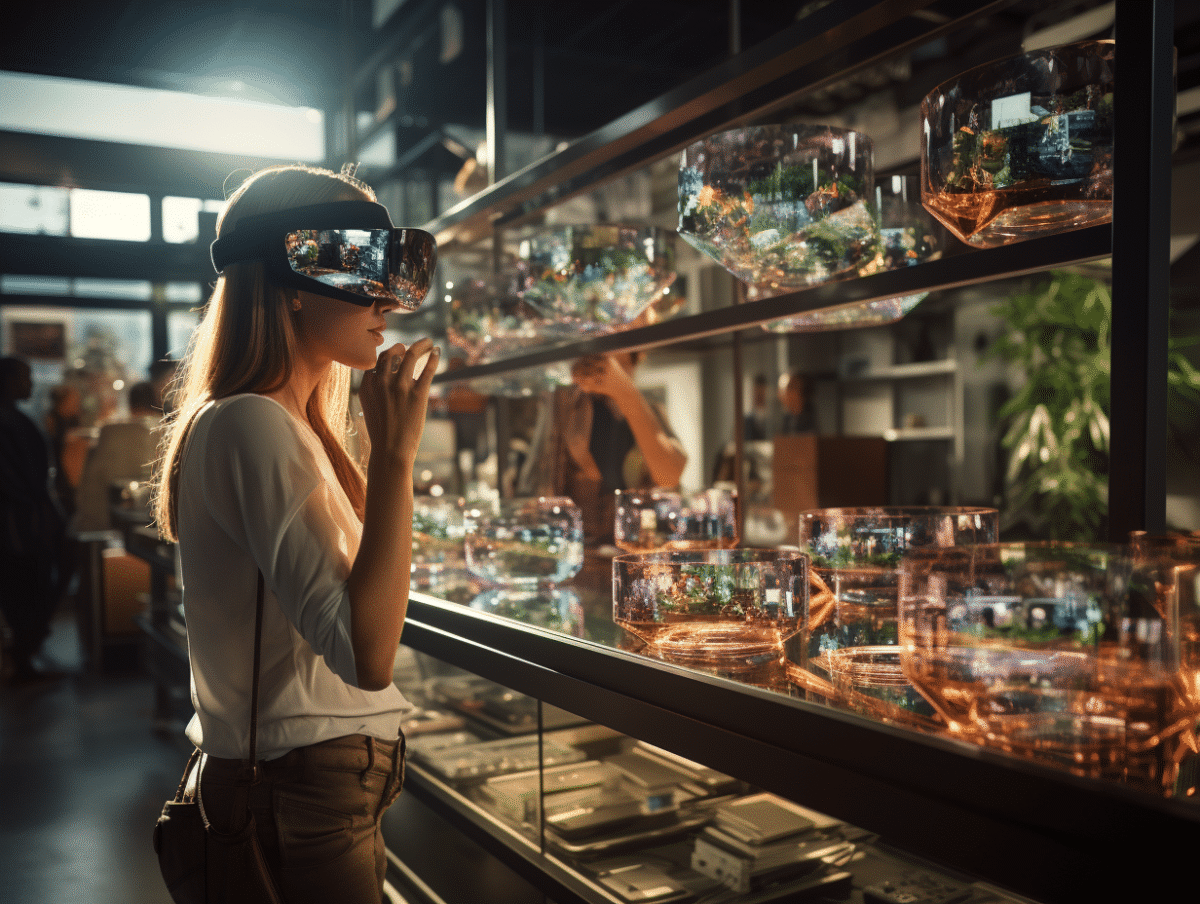
Augmented reality (AR) is redefining the interaction between technology and human experience. Driven by advancements in computer vision, graphics processing, and sensors, this technology integrates virtual elements into our perception of the real world, creating immersive and interactive experiences. Various applications are emerging, impacting sectors such as video gaming, education, medicine, and retail. Companies are exploring AR to enhance professional training, while in retail, it offers consumers a new dimension for trying products. AR is on its way to becoming a daily tool, transforming the way we work, learn, and entertain ourselves.
Augmented Reality: An Immersive Technology for Innovation
Augmented reality orchestrates a sophisticated fusion between the real world and its virtual counterpart. Embodied by devices such as AR glasses, also known as smart glasses, smartphones, and tablets, it invites a redefinition of the user experience. L’Intercom, among other technologies, benefits from the enhanced capabilities of these devices to utilize AR, in conjunction with appropriate applications, to pave the way for unprecedented collaborative work and customer loyalty through unique experiences. 5G, with its significant impact, promises to intensify the diversity of AR and VR applications, opening new horizons across multiple fields of application.
The digital marketing sector, influenced by digitalization and the constraints imposed by the pandemic, is firmly turning towards augmented reality. This strategic pivot, which became evident in 2022, allows companies to offer enriched marketing campaigns and immersive brand experiences, thereby generating more effective communication and a strengthened brand image. Companies like CAD Schroer provide their expertise in consulting for AR and VR applications, as well as the development of specific applications, to maximize these benefits for businesses.
Augmented reality and virtual reality bring a new dimension to communication and the presentation of complex products. They enable the creation of emotional experiences for users and provide a detailed insight into complex products, valuable assets for companies looking to impress and engage their customers. VR terminals and applications like the VR Viewer i4 VIRTUAL REVIEW perfectly illustrate the contribution of these technologies to immersive communication, paving the way for effective marketing campaigns and impressive shopping experiences.
Exploring Practical Applications of Augmented Reality Across Various Sectors
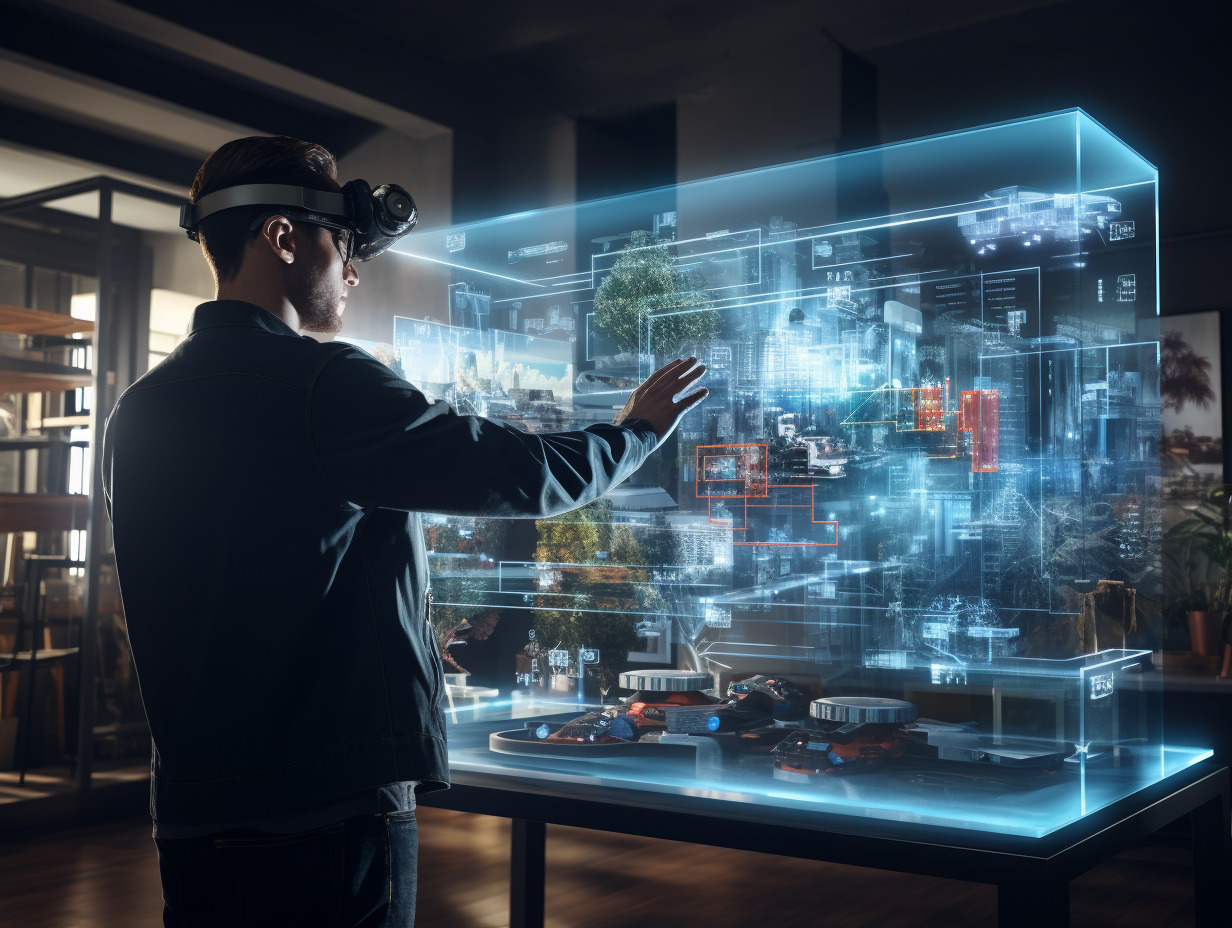
Integrated into spheres as diverse as industry, commerce, and education, augmented reality (AR) proves its ubiquity. AR glasses, combined with cutting-edge applications, allow engineers to visualize and manipulate 3D models in real-time, thus optimizing design and maintenance processes. Smartphones, which have become true AR portals, offer consumers the ability to try products virtually, disrupting the traditional in-store shopping experience.
Marketing, undergoing digital transformation, is seizing this technology to reshape customer engagement. The year 2022 marks a turning point, with the emergence of campaigns entirely shaped by AR and virtual reality (VR). AR serves to enrich the customer experience, strengthen brand image, and energize event marketing, where companies like Audi use the VR Viewer i4 VIRTUAL REVIEW to immerse customers in unprecedented promotional environments.
On the communication front, AR and VR are revolutionizing the transmission of complex information. These technologies enable companies to present their products innovatively, creating memorable shopping experiences and simplifying the understanding of technical products or sophisticated services. Users benefit from emotional experiences, increasing brand attachment and the effectiveness of marketing campaigns.
CAD Schroer, a major player in consulting and developing AR/VR applications, supports companies in this digital transition. By offering customized solutions, they enable brands to embrace these new technologies to enhance the presentation of their products and services while creating immersive experiences that captivate and retain their customers.