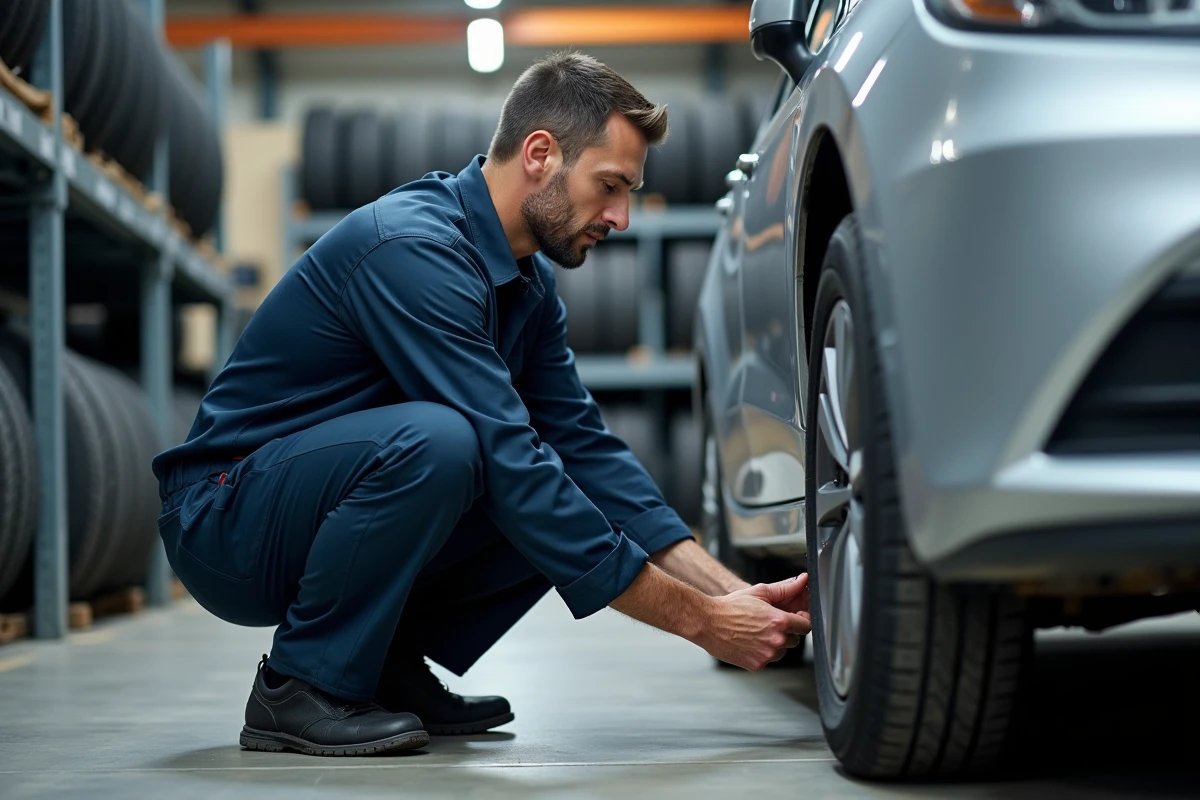
A worn tire on wet roads dramatically increases braking distance. On dry roads, the difference between a good and a bad tire is less noticeable, but as soon as the asphalt is covered with water, the choice of tire becomes a real safety parameter. Choosing the right tires for cars and motorcycles in 2024 starts with understanding what you read on the sidewall, then adapting your purchase to your actual usage.
Read the sidewall of a car or motorcycle tire before any purchase
Have you ever looked at the molded inscriptions on the side of a tire? The sequence of numbers and letters (for example, 205/55 R16 91V) is not decorative. Each segment provides a specific technical piece of information.
The first number (205) corresponds to the width of the tread in millimeters. The second (55) indicates the height of the sidewall, expressed as a percentage of that width. The letter R indicates a radial construction, which is standard today. The next number (16) designates the diameter of the rim in inches. Finally, 91V combines the load index and the maximum speed index.
On a motorcycle, the logic remains the same, but the shape of the tire changes radically. A motorcycle tire has a rounded profile to allow leaning in corners. Fitting a tire whose indices do not match the manufacturer’s recommendations can lead to a rejection at the technical inspection, and especially to degraded road behavior. The dimensions are listed in the vehicle manual and on the registration certificate, which is the starting point before any search.
To compare references and prices between different brands, specialized platforms like auto-moto-pneu.net allow filtering by exact size and type of use.
Summer, winter, or all-season tires: which type to choose based on your region

The choice between summer tires, winter tires, and all-season tires depends less on the calendar season than on the ground temperature. A summer tire offers its best performance above about seven degrees. Below that, its rubber hardens and loses grip.
A winter tire, identifiable by the 3PMSF marking (the mountain pictogram with a snowflake), maintains its flexibility in cold weather thanks to a rubber compound rich in silica. The Mountain Law requires winter tires or chains in certain departments between November and March. If you regularly drive in mountainous areas or in the north of the country, the winter tire remains the safest choice.
The all-season tire represents a compromise. It performs adequately over a wide range of temperatures, but it does not equal the summer tire in full sun or the winter tire on ice. For an urban driver covering moderate distances and only occasionally facing snow, it is a sensible option.
A motorcyclist does not have this alternative: motorcycle tires are designed for road use or sports use. Seasonal changes are more about adjusting pressure and riding style.
Tires for electric vehicles: a technical constraint often overlooked
Electric cars pose a particular problem for tires. Their battery adds several hundred kilos to the vehicle compared to an equivalent thermal model. The motor’s torque, available from the start, puts more aggressive stress on the rubber.
Fitting conventional tires on an electric vehicle significantly accelerates their wear. Manufacturers have responded by developing dedicated ranges, sometimes called “EV ready.” Michelin, for example, offers the e.Primacy range, Continental the EcoContact 6 Q, and Goodyear the ElectricDrive. These tires feature reinforced sidewalls and rubber compounds formulated to withstand the extra weight and instant torque.
If you drive electric, ensure that the chosen tire has a compatibility mention. This criterion does not yet systematically appear in general purchasing guides, but it affects both the longevity of the set and the vehicle’s energy consumption.
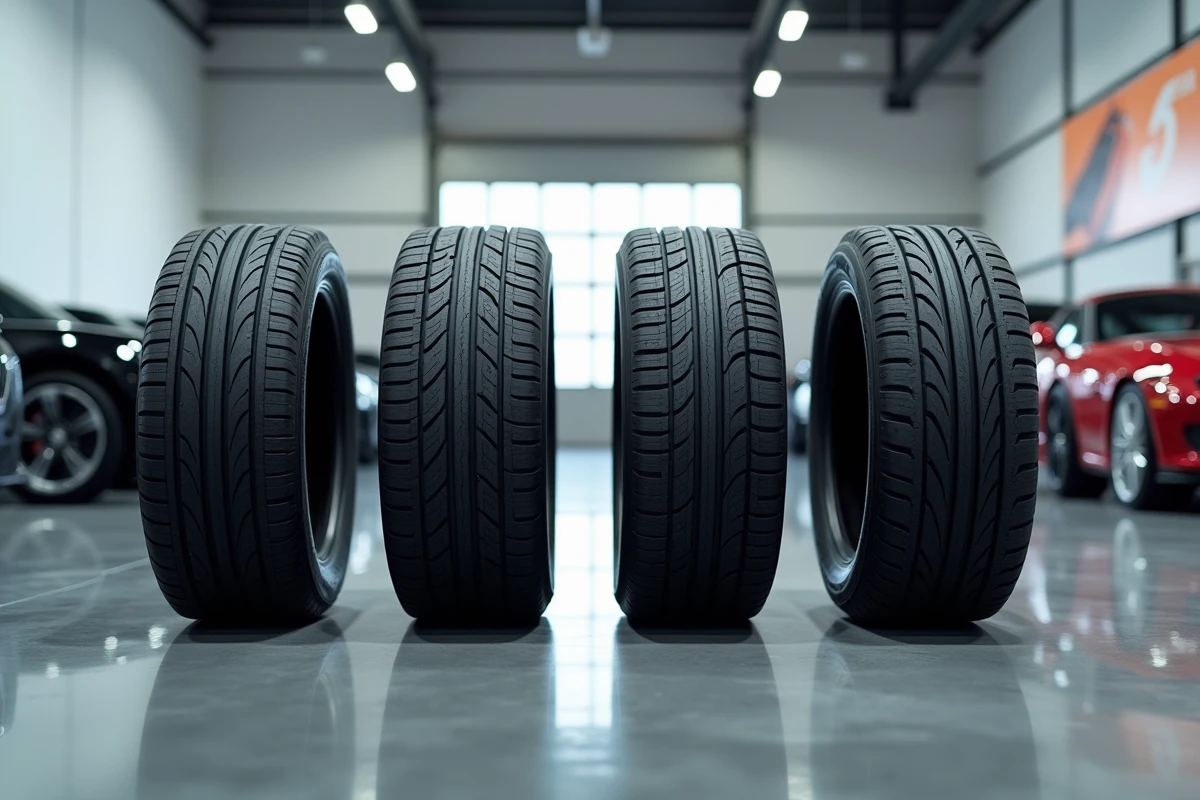
European label and noise label: decoding the true performance of a tire
Since its recent revision, the tire energy label displays three criteria in the form of classes (from A to E):
- Rolling resistance, which directly influences fuel or energy consumption. A tire rated A consumes significantly less than a tire rated E over the same distance.
- Wet grip, measured by braking distance. The difference between a tire rated A and a tire rated E translates into several additional meters of braking.
- External rolling noise, expressed in decibels and accompanied by a class (A, B, or C). This criterion is gaining importance with noise restrictions in urban areas, reinforced by the revision of European regulation 2020/740.
For motorcycle use, this label does not yet exist in the same form. The choice relies more on user feedback and specialized tests. On dedicated forums, comparisons between Michelin Road 6, Bridgestone T32, or Metzeler Roadtec 01 SE frequently arise for versatile road use.
Tire pressure and TPMS compatibility: two checks not to be overlooked
How often do you check your tire pressure? Most drivers wait for the dashboard warning light. The TPMS system, mandatory on new cars in Europe since November 2014, alerts in case of under-inflation. An under-inflated tire wears out faster on the edges, increases consumption, and degrades road handling.
A rarely discussed point concerns the compatibility of TPMS sensors when changing rims or sizes. In the used car market, some imported vehicles circulate with worn or incompatible sensors. Check the compatibility of TPMS valves before fitting new rims, or you risk losing the pressure alert.
On a motorcycle, TPMS is not mandatory, but aftermarket kits are available. Pressure should be checked manually, ideally when cold, every two weeks. A difference of a few tenths of a bar between the front and rear already alters cornering behavior.
The choice of a car or motorcycle tire in 2024 is not limited to brand or price. Exact size, seasonal type suited to your climate, compatibility with an electric vehicle, reading the European label, and the state of TPMS sensors: each of these parameters impacts safety and the lifespan of the set. A well-chosen and properly inflated tire remains the best investment for your road safety.