
A high-performing kitchen relies on a technical triptych: cooking, ventilation, and preservation. Each area utilizes equipment whose characteristics determine the quality of preparations, the safety of occupants, and the longevity of the materials. Before making a shopping list, understanding what distinguishes reliable equipment from a fleeting gadget helps avoid costly replacements.
Kitchen Ventilation: A Regulatory Obligation Often Overlooked
Competitors talk about knives, pans, and storage. Few address ventilation, which is, after all, a safety as well as comfort equipment. In France, the decree of March 24, 1982, mandates general and permanent ventilation of dwellings, with mandatory extraction in the kitchen.
Without effective extraction, cooking vapors laden with grease and moisture degrade surfaces, promote mold, and alter indoor air quality. An external extraction hood should not be connected to a conventional VMC unless the installation has been specifically designed for this purpose.
The choice is between an extraction hood (venting outside) and a recycling hood (active charcoal filtration). The former is more effective at eliminating humidity, while the latter is suitable when no wall outlet is possible. In both cases, regular maintenance of the filters ensures sufficient airflow to protect both lungs and furniture.
When reviewing the equipment at La Cigale et la Fourchette, one realizes the extent of areas to cover beyond just the basic cookware.
Cooking Equipment: Cast Iron, Stainless Steel, or Non-Stick Depending on Use
The coating of a cooking utensil determines its thermal conductivity, lifespan, and maintenance. Three families dominate the market, each with a specific usage scope.
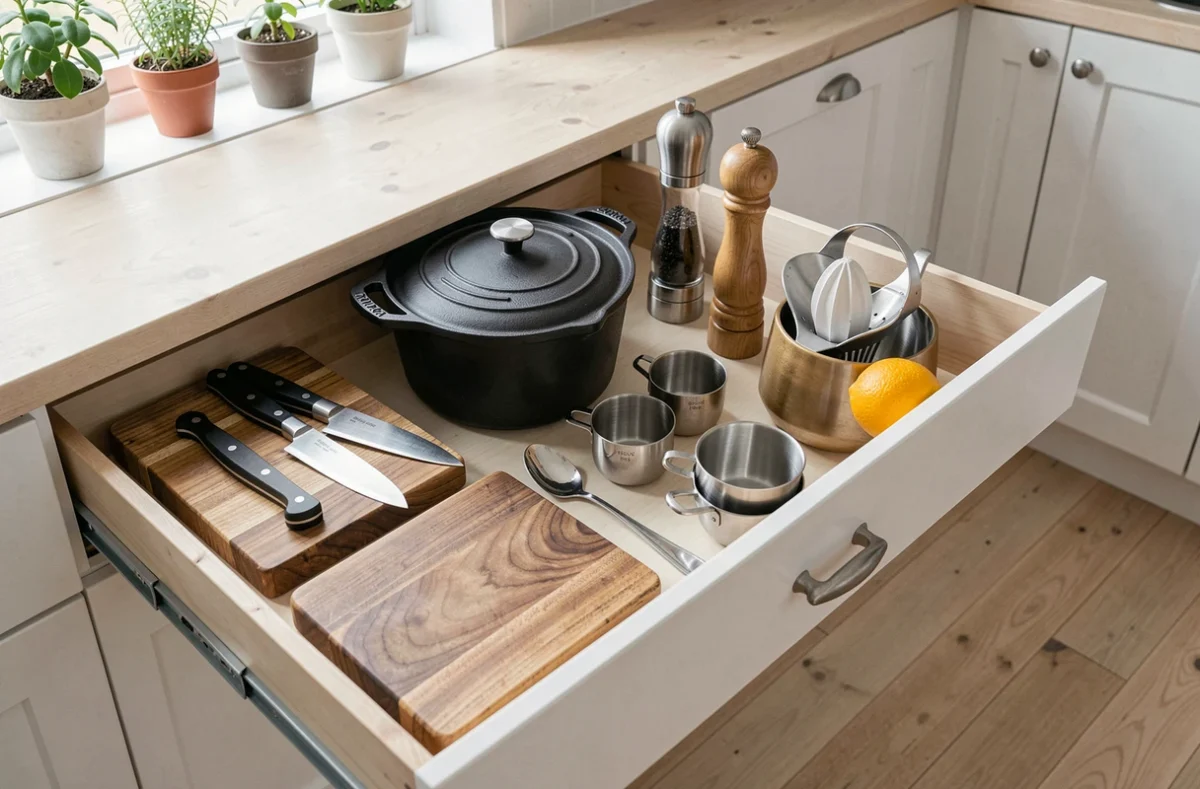
- Enamelled Cast Iron: high heat retention, ideal for stews and long braises. Significant weight, slow to heat up, but nearly indestructible if the enamel remains intact.
- 18/10 Stainless Steel: neutral in taste, compatible with all heat sources, resistant to thermal shocks. It requires a bit of fat to prevent food from sticking but does not release any compounds in acidic preparations.
- Non-Stick (PTFE or Ceramic): cooking with low fat, quick cleaning. Shorter lifespan, sensitive to metal utensils and overheating beyond the manufacturer’s recommended thresholds.
A coherent cooking setup for a household includes at least a non-stick frying pan for quick cooking, a medium-sized stainless steel saucepan for sauces and vegetables, and a cast iron casserole for dishes that require enveloping heat.
The Knife: One Good One is Better than Five Mediocre Ones
A versatile chef’s knife of good quality covers most daily cutting tasks. The sharper the blade, the lower the risk of injury, as the hand does not have to force and slip. A paring knife completes the set for precision tasks (peeling, vegetable turning).
A sharpening steel or a fine-grit stone allows for maintaining the edge between professional sharpenings. Storing the blades in a block or on a magnetic strip protects the blade’s edge and prevents accidents at the bottom of a drawer.
Kitchen Appliances: Choose Durability Over Functions
The common reflex is to compare the programs and power of an oven or a food processor. A more decisive criterion in the long term is the availability of spare parts and ease of repair.
The durability index, established in France for televisions in January 2025 and washing machines in April 2025, combines repairability and reliability. It does not yet cover the main kitchen appliances (oven, refrigerator, dishwasher). However, the European right to repair strengthens consumer protection: a repair carried out within this framework extends the legal warranty of conformity by one year.
Electric Oven or Gas Oven: Two Cooking Logics
The electric oven offers precise temperature regulation and often a convection mode that homogenizes cooking. The gas oven heats up faster and produces a slightly humid atmosphere, advantageous for bread and certain pastries.
The choice depends on the available fuel and the type of preparations favored. An oven with a steam function adds appreciated versatility for cooking vegetables without excessive nutrient loss.
Multi-Function Robot or Separate Appliances
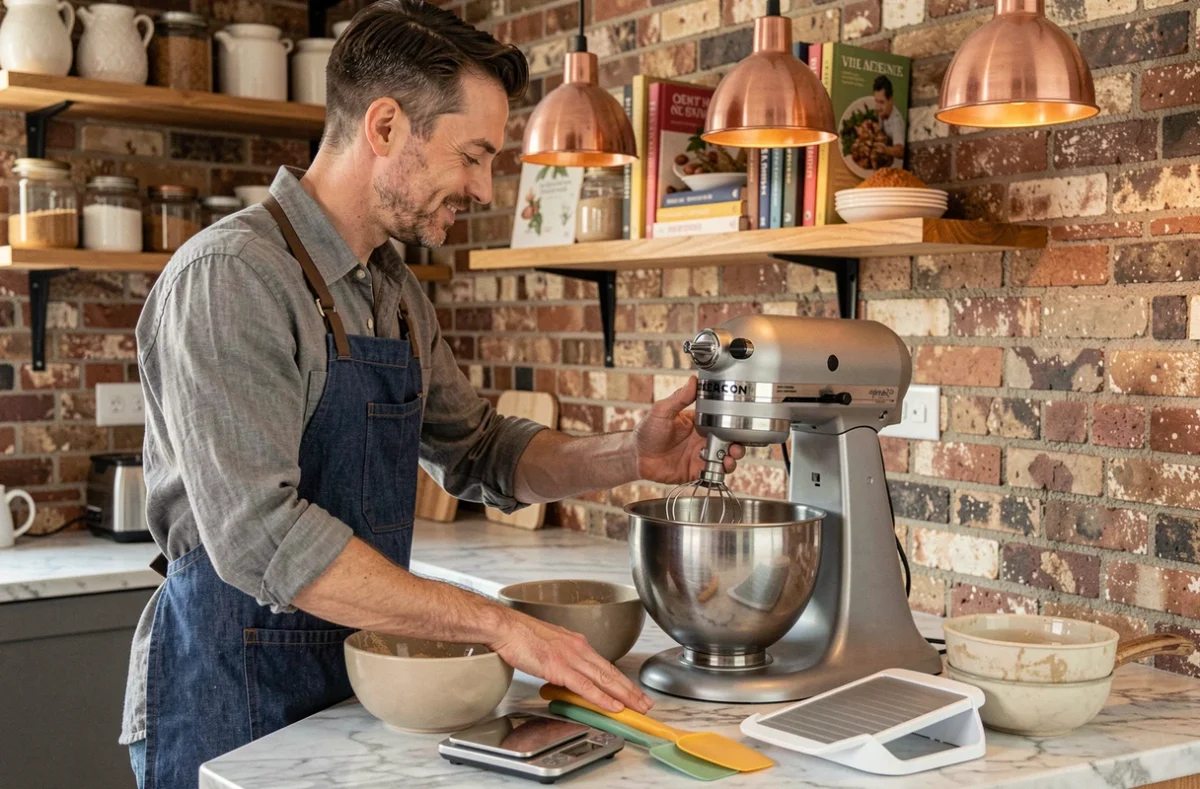
A multi-function robot replaces a blender, mixer, and sometimes a kneader. Its relevance depends on the frequency of use: a versatile device used every week is better than three distinct devices stored in a cupboard. Before purchasing, checking that the bowl, blades, and seals are sold separately by the manufacturer reduces the risk of having to replace the entire unit for a faulty part.
Storage and Work Surface: Ergonomics in Service of Performance
A clear work surface speeds up preparation and limits the risks of cross-contamination. The material of the surface (laminate, quartz, solid wood, stainless steel) influences resistance to cuts, heat, and stains.
Interior storage (sliding drawers, rotating trays in corners) improves access to heavy utensils effortlessly. A compartmentalized cutlery tray protects blades and organizes small cutlery. The height of the work surface, often standardized, benefits from being adapted to the size of the primary user to avoid back pain during long preparations.
- Prefer under-cabinet lighting directed towards the work surface, sufficient for working without shadows on the cutting board.
- Plan for at least two accessible electrical outlets in the backsplash to plug in small appliances without an extension cord.
- Install the trash can in immediate proximity to the cutting area to streamline the sorting of peels.
Equipping a kitchen is not just a checklist of utensils to tick off. Ventilation conditions the room’s hygiene, the choice of cooking materials influences the quality of dishes, and the repairability of appliances determines the real cost over several years. Investing in fewer, but better-chosen equipment remains the most cost-effective strategy for a kitchen that functions daily.