Evaluating walking performance is fundamental for walkers concerned about their progress and health. Converting steps into kilometers provides a tangible metric to track endurance and distance covered. This allows for setting achievable goals, adjusting training intensity, and staying motivated. This measurement is essential for fitness programs that often recommend a daily step count. Having a way to quantify efforts helps to better understand the impact of walking on physical and mental well-being.
The Importance of Converting Steps into Kilometers for Accurate Performance Evaluation
For walking enthusiasts, measuring walking performance goes beyond just counting steps. Converting these steps into kilometers offers a more precise perspective on physical activity and its influence on health. Walking, recognized for its benefits, involves a quantity of movement that remains abstract when measured only in steps without estimating the distance covered.
Converting steps into kilometers is not a whim, but a necessity to appreciate progress. For example, knowing that 6000 steps in km represent approximately 4.8 km, based on the average stride length, provides a reliable indicator for adjusting walking goals. It also allows for comparisons with other walkers or established standards, thus fostering healthy competition or motivating self-assessment.
The relationship between walking and improved health is well established, and tracking distance covered in kilometers reinforces this dynamic. The estimation of distance covered motivates the walker to push themselves and follow a progression curve that reflects their efforts and endurance.
Moreover, converting steps into kilometers is not just a matter of numbers. It plays a crucial role in the perception of achievements and the definition of new challenges. Walking performance is measured not only in steps but also, and especially, in kilometers covered, which are true indicators of personal progress.
Methods and Tools for Effectively Measuring and Converting Steps into Distance Covered
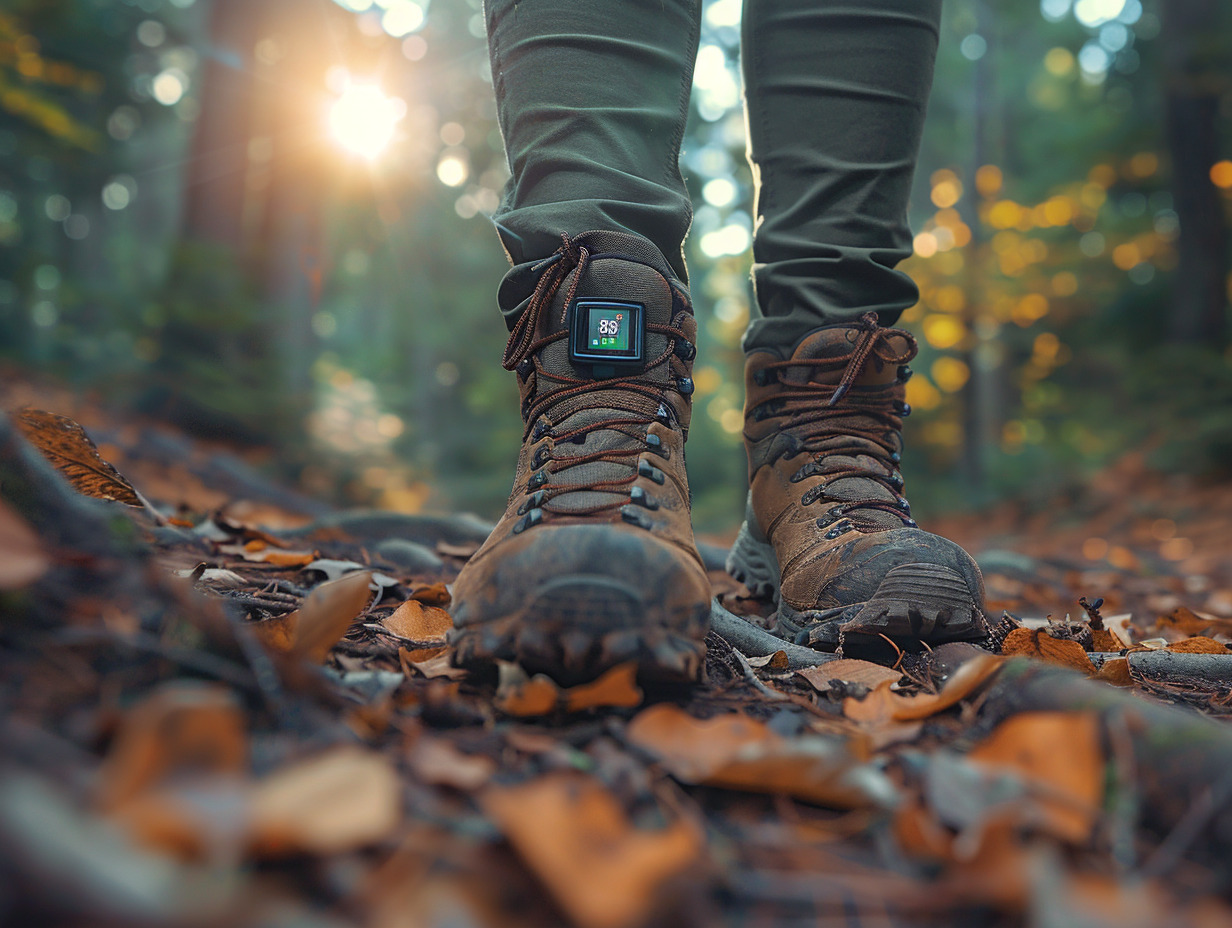
In the modern walker’s toolkit, the pedometer remains a basic yet effective tool. Discreet and practical, it measures the number of steps taken. For more in-depth analysis, many mobile apps turn smartphones into a true activity tracking hub. These apps, using built-in motion sensors, offer increased accuracy in measuring steps and converting them into kilometers.
The evolution of technology has led to the development of step tracking apps that adapt to the user’s stride length, allowing for a more accurate estimation of distance covered. These digital tools are particularly useful for hiking and running enthusiasts, where distance precision is crucial for evaluating performance and progress.
Setting a daily step goal to convert into kilometers motivates and instills a dynamic of continuous progress. With these technological tools, walkers can not only measure and analyze their activity but also share their achievements, set challenges, and encourage each other in reaching their walking goals.