Cooking is an art that requires precision and creativity. Often, recipes require various measurement conversions, which can be a source of confusion for many. Whether it’s converting ounces to grams or cups to milliliters, these calculations play a fundamental role in the success of dishes. Fortunately, there are simple and even surprising tips to navigate these conversions easily without needing a scale or calculator. Ingenious methods include using common objects to estimate volumes or weights, making cooking more accessible and less intimidating for all food enthusiasts.
Techniques and Tips for Accurate Conversions in Cooking
Precision is key to success in cooking, and measurement unit conversions play a decisive role. However, making conversions accurately can sometimes seem complex. A conversion chart, an essential tool for chefs, allows you to juggle different units of measurement, whether they are liquid, dry, or weight. Liquid measurements, for example, are expressed in volumes and are commonly measured in tablespoons, teaspoons, or cups. Easily convert 125 ml to cl, knowing that 1 cl equals 10 ml, thus simplifying the transition from one unit to another.
Dry measurements, on the other hand, are often measured in volume with specific cups, but conversion errors can occur if the density of the ingredient is not taken into account. For dry ingredients, weight can often provide greater accuracy, which is why some chefs prefer weight measurements. Invest in an accurate kitchen scale and document conversions to ensure consistent results.
Tips for Effective Conversion include consistency with measurement units and using precise measuring tools. For example, when working with liquids, prefer a measuring cup over kitchen utensils that may vary in size. This method ensures uniformity in your recipes and reduces the risk of errors.
Develop an understanding of advanced conversion techniques. You need to know the relationship between measurement units to adjust them according to the recipe’s needs. When in doubt, always refer to your reliable conversion chart and consider the specifics of each ingredient. Documentation and experience gained through culinary trials will greatly contribute to mastering conversions in cooking.
Unusual Methods to Master Conversions Without Standard Measurements
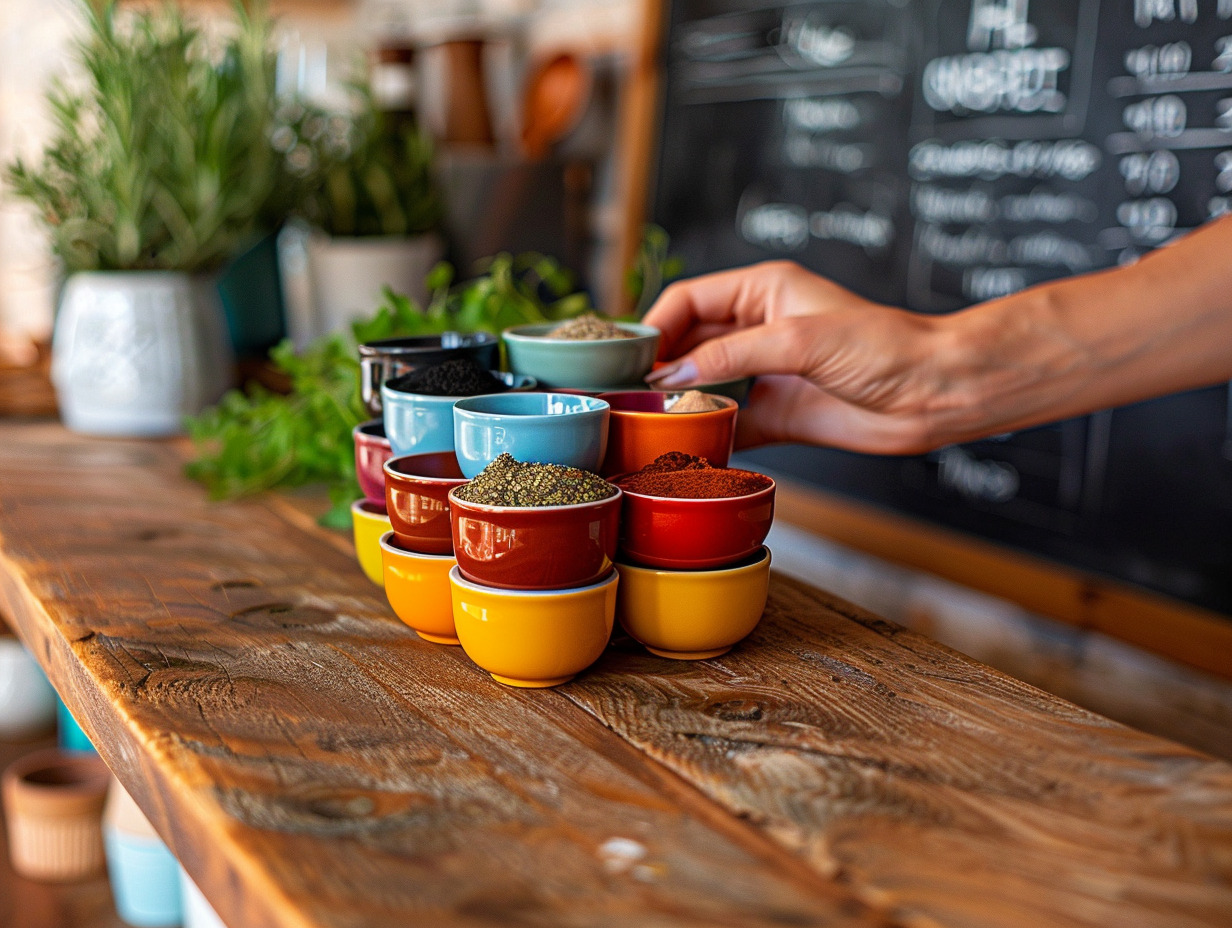
Experience and intuition: two pillars that, combined with less orthodox methods, can prove valuable for converting measurement units in cooking. For seasoned chefs, instinct sometimes plays as important a role as measuring instruments. A pinch of salt taken by hand or a drizzle of oil controlled by a steady hand can replace measuring spoons in the heat of the moment. These techniques rely on a deep understanding of ingredients and proportions, acquired after years of practice.
In professional catering, the ability to adjust recipes for large volumes, such as a Margherita pizza for 300 people, reveals the importance of mastering conversions. Here, the application of practical strategies for conversion is essential. A cup can become a known-sized container whose capacity is pre-measured, and the ratios between ingredients are adjusted based on a fixed base.
Chefs sometimes use everyday objects as a reference to convert measurement units. A measuring cup can thus be replaced by a standard drinking glass whose capacity is known, or a matchbox to estimate cubic centimeters. These methods require an understanding of the international system of units, but allow for quick adjustments of proportions without specialized equipment.
Flexibility and consistency are essential to ensure the quality of dishes, hence the need for a good mastery of conversions. These skills allow professionals to juggle different recipe sizes and maintain the integrity of flavors, even in the absence of standard tools. Experience and ingenuity serve as complementary tools to conversion charts, offering creative freedom while ensuring consistent culinary results.