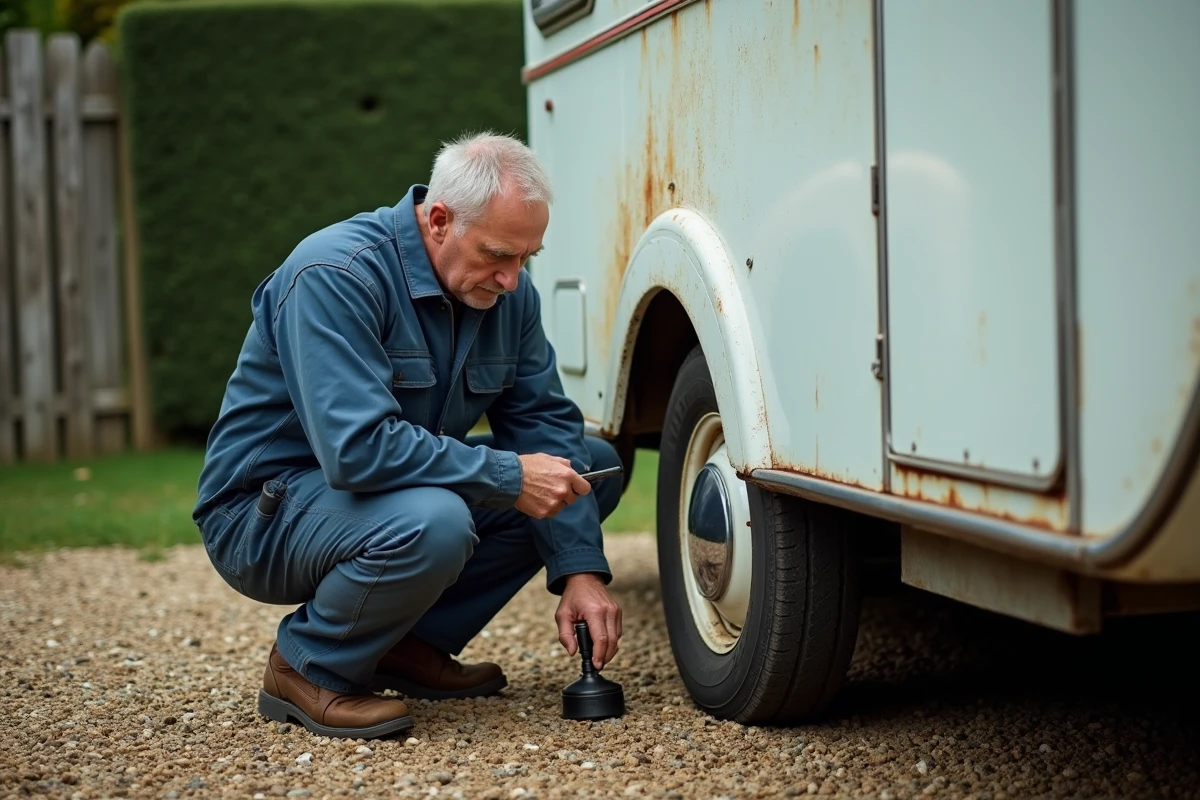
A newly purchased caravan can last ten years, fifteen years, and sometimes much longer. The lifespan of a caravan depends less on its actual age than on how it has been stored, maintained, and protected from moisture. Before looking for a used model or extending the life of your current caravan, it’s essential to understand what truly wears it out.
Floor and Infiltrations: The First Signs of Aging in a Caravan
Most guides talk about exterior maintenance. The real weak point is under your feet. Plywood floors are the first to suffer when moisture settles permanently in the structure.
Recent feedback on the Eriba Touring forum reports cases of floor delamination after only seven to eight years of seasonal use. The main cause: winter storage in a non-ventilated space, where condensation accumulates month after month.
You can find Babar Autour du Monde’s advice to delve deeper into the points of vigilance related to the overall longevity of a caravan.
A floor that buckles or sounds hollow underfoot is a major warning sign. At this stage, moisture has likely migrated to the sidewalls. Repairs often cost more than the vehicle’s residual value.
Aluminum or Polyester: Which Material Performs Better in Humid Areas
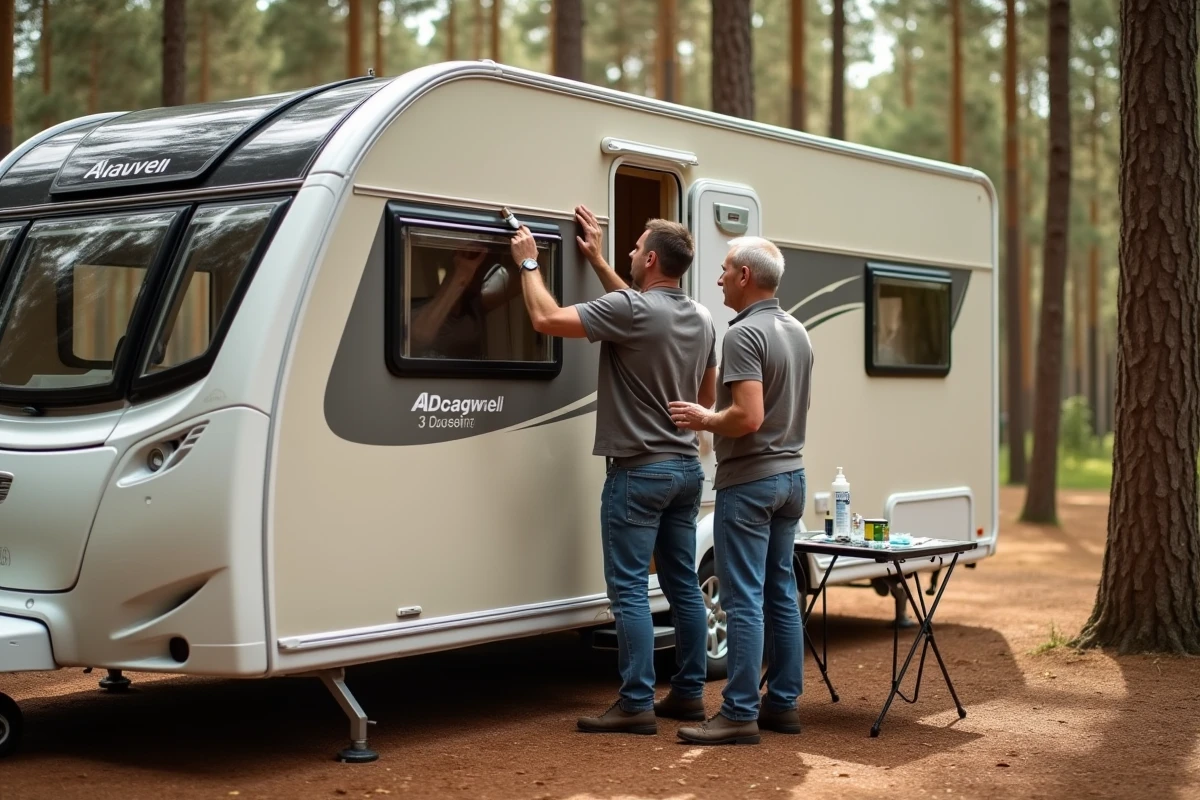
Do you live or travel often in coastal areas? The choice of shell material directly influences the lifespan of your caravan. According to a UFC-Que Choisir study published in April 2026 on materials and the longevity of recreational vehicles, aluminum caravans resist corrosion 30 to 50% better than polyester models in humid coastal environments.
Polyester is not a bad material in itself. It works very well for continental use, far from salty air. However, if your caravan spends several weeks a year by the sea or in Brittany, aluminum offers significantly better structural protection.
This finding has a direct consequence on the used market. A well-maintained aluminum caravan retains a better resale value because buyers know it has better withstood climatic aggressions.
Climate-Controlled Warehouse Storage: Surpassing the Twenty-Year Mark
The majority of caravan owners store their vehicle in a garden, under a tarp, or in an open agricultural shed. These solutions protect from direct rain but not from the main enemy: temperature and humidity fluctuations.
A climate-controlled warehouse maintains a stable humidity level year-round. Plywood does not swell, joints do not shift, and condensation does not form. This type of storage is common in Scandinavian countries, where harsh winters would accelerate degradation without this precaution.
Why does this storage method remain marginal in France? The cost, primarily. Renting a climate-controlled space for a caravan represents a significant annual budget. However, over time, the calculation can reverse.
- A caravan stored outside under a tarp shows signs of structural fatigue after about ten years, even with regular maintenance
- Storage in a ventilated (non-climate-controlled) shed pushes this deadline back a few years but does not eliminate the risk of winter condensation
- A climate-controlled warehouse allows for over twenty years of use without major degradation of the floor or window seals
Storage is the factor that weighs most heavily on the actual longevity of a caravan. More than the frequency of use, more than the brand.
Maintenance of Water Tanks and Gas Circuit: The Important Actions
Routine maintenance of a caravan often focuses on the bodywork. Exterior cleaning is visible and gratifying, but it does not protect hidden components.
Gray water and wastewater tanks must be drained and cleaned after each camping season. An appropriate cleaner eliminates organic residues that cause odors and deposits. A poorly maintained water tank promotes bacterial growth within weeks.
The gas circuit deserves special attention. Connection hoses have an expiration date, often engraved on the hose. A cracked or expired hose poses a fire or poisoning risk. The check takes two minutes.
The auxiliary battery loses capacity if it remains discharged throughout the winter. To preserve it:
- Disconnect it before storage and store it in a temperate place
- Recharge it once a month during the inactive period with an appropriate charger
- Check the electrolyte level if the battery is not sealed
New Caravans and Material Quality: A Trend to Watch
Buying new does not automatically guarantee peace of mind. The ADAC Caravan Test 2025 report, published in March 2025, notes a rise in moisture problems in new caravans linked to the increasing use of cheap composite materials.
Users report early infiltrations despite rigorous maintenance. The issue stems from manufacturing quality, not owner behavior. Before purchasing, check the manufacturer’s reputation on this specific point and ask for written guarantees against infiltrations.
This phenomenon also puts into perspective the idea that an older caravan would necessarily be less reliable than a newer model. A well-stored fifteen-year-old vehicle can have a healthier structure than a poorly assembled three-year-old model.
The lifespan of a caravan hinges on three fronts: the storage method, the rigor of maintenance of the circuits (water, gas, battery), and the initial quality of the materials. An informed buyer looks under the floor before looking at the price.