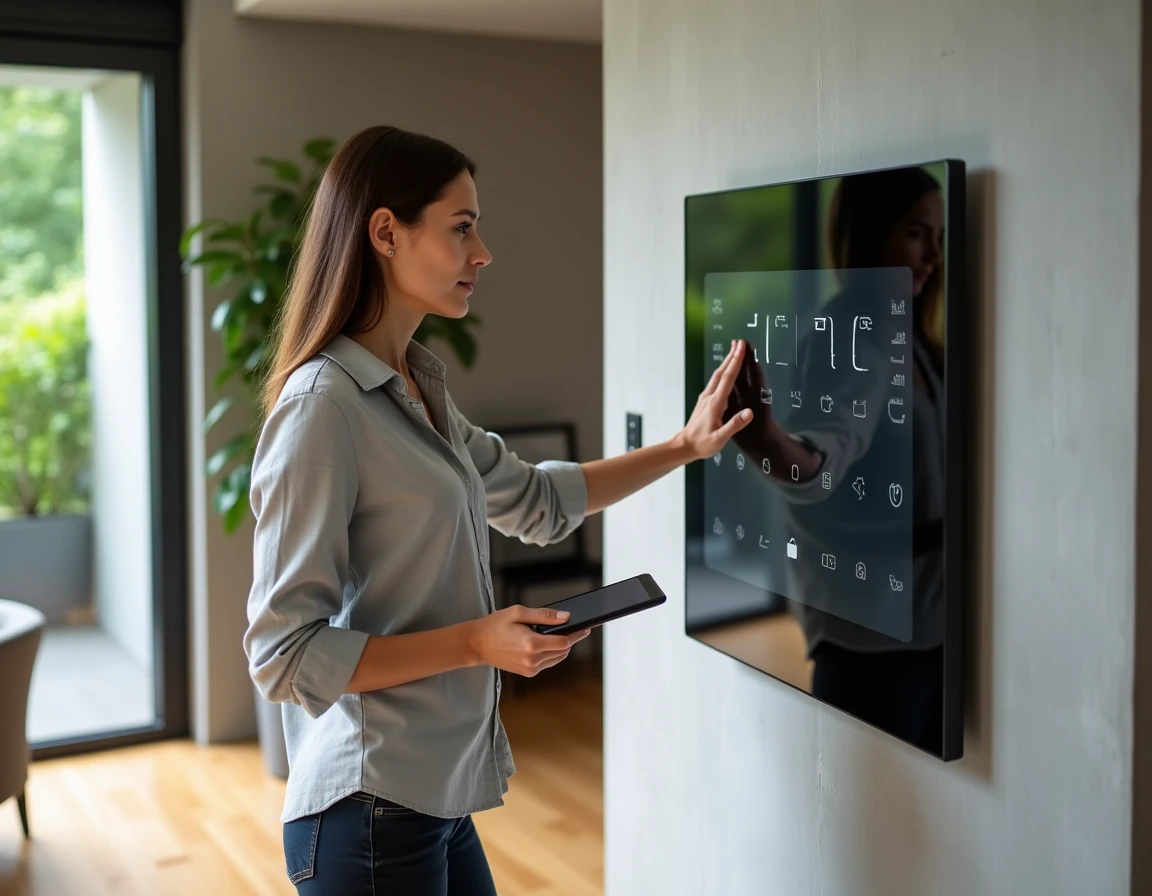
The connected home market has moved beyond voice-controlled gadgets. With the arrival of the Matter standard and the repositioning of premium manufacturers on network cybersecurity, high-end connected home equipment is no longer just an aesthetic choice. It determines the reliability of automations, audio/video latency, and the protection of personal data that travels through the home network.
Matter Interoperability: What a Certified High-End Device Changes

The majority of frustrations in home automation stem from a simple problem: two devices from different brands refuse to collaborate. Programmed scenes fail, automations trigger with delays, and the user ends up controlling everything manually.
The Matter 1.2 and 1.3 standards change this situation. Brands like Sonos, Apple (HomePod), Samsung (SmartThings), and Schneider Wiser now natively integrate this protocol into their premium products. The concrete result: a Schneider Wiser thermostat can trigger a scene that simultaneously adjusts Philips Hue lighting, Somfy shutters, and air conditioning, without a proprietary intermediate hub.
Field feedback diverges on one point. Matter certification guarantees a base level of compatibility, but complex automations remain dependent on the chosen central hub. A HomePod does not manage the same conditional triggers as a SmartThings. Therefore, before investing in a premium ecosystem, one must identify the scenarios they truly want to automate and then verify that the central controller supports them.
To explore the ranges of products compatible with these requirements, the equipment offered by MetamorpHouse covers several categories of high-end home automation.
Audio and Video Latency Across Multiple Rooms: The Technical Criterion That Product Sheets Overlook
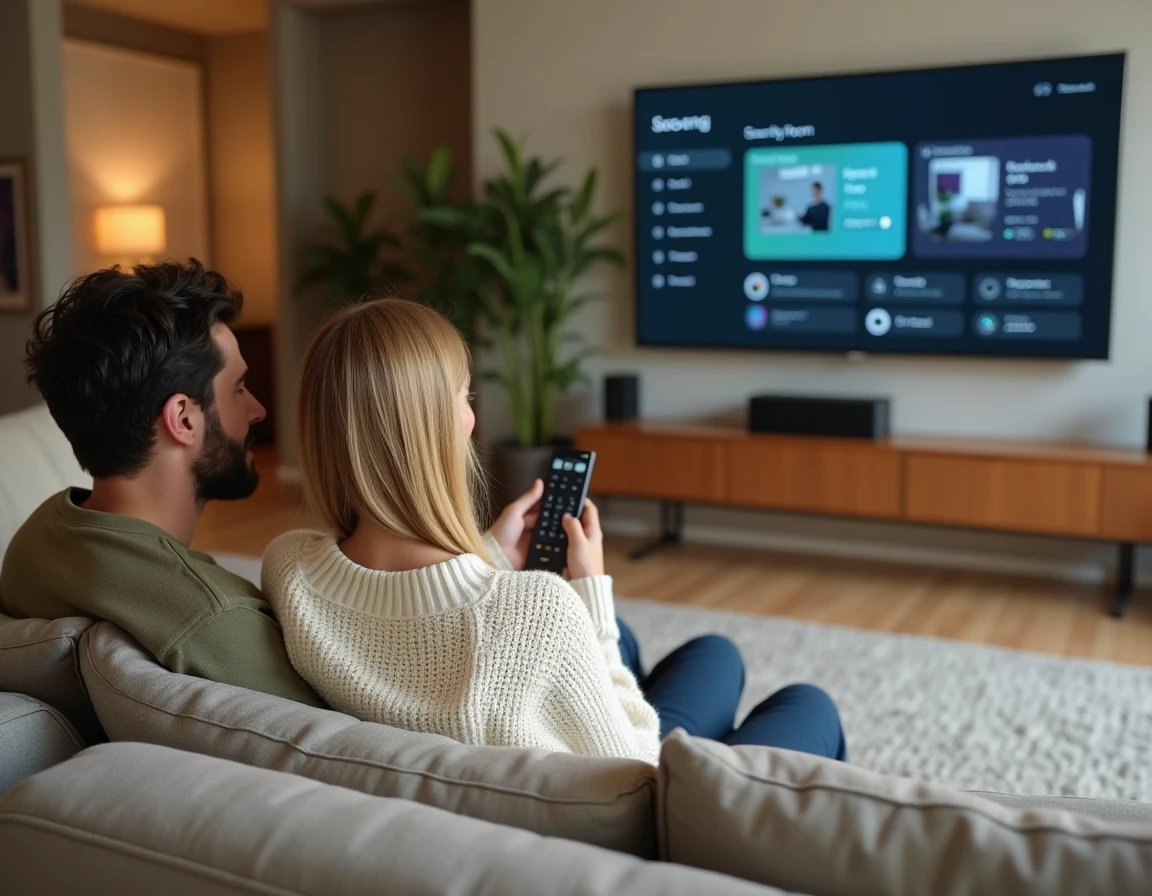
Streaming music in three rooms with a noticeable delay between each speaker is a sign of an undersized or poorly configured system. In a home cinema setting, a delay of a few dozen milliseconds between the soundbar and the surround speakers is enough to break immersion.
Bang & Olufsen, Bose, Samsung (Neo QLED range), and Sony (high-end Bravia range) now emphasize multi-room synchronization with very low latency. Their recent product announcements highlight support for technologies like eARC, VRR, and ALLM, originally designed for gaming but also benefiting home cinema and video conferencing.
What Truly Distinguishes a Premium System from a Consumer System
Reduced latency does not solely depend on the speakers or the screen. It relies on the entire chain: the router, the network protocol (Wi-Fi 6E or wired), the home automation controller, and the software settings. A high-end Sony Bravia television connected to an entry-level router will not take advantage of its eARC capabilities.
Thus, the choice of the home network conditions the perceived quality of the installation. A system that works perfectly with two speakers may show its limitations as soon as you switch to five audio devices distributed throughout the house. The available data does not allow for a universal threshold of acceptable latency, as perception varies according to usage (background music, movies, video games).
Network Cybersecurity: The Weak Point of High-End Connected Installations
The more a connected home is equipped, the larger its attack surface becomes. Each sensor, each camera, each connected lock is a potential entry point. Premium manufacturers have understood this and are repositioning their offerings accordingly.
In recent years, high-end home routers (Netgear Orbi, some recent French operator boxes) have offered advanced security features:
- Integrated firewall with secure DNS filtering, which blocks requests to malicious servers before they even reach connected devices
- Automatic network segmentation for connected objects, which isolates cameras and sensors from the main network used by computers and smartphones
- Protection subscriptions managed in partnership with cybersecurity players, offering real-time monitoring of abnormal behaviors on the network
This layer of security is absent from most installations based on consumer-grade equipment. A low-cost connected thermostat works, but it does not benefit from regular security updates and is not isolated from the rest of the network by default.
The Regulatory Angle to Watch
The European regulation on the cybersecurity of connected objects is evolving. Manufacturers anticipating these requirements are already integrating mechanisms for automatic updates and end-to-end encryption. A premium device protects the installation over time, whereas an entry-level product risks becoming an unpatched vulnerability after a few years without updates.
High-End Connected Home: The Concrete Trade-offs Before Investing
A common mistake is to accumulate premium equipment without overall coherence. High-end connected lighting paired with a saturated Wi-Fi network produces a mediocre experience. The relevant investment focuses on three levels, in this order:
- The home network first (Wi-Fi 6E router or high-performance mesh, Ethernet cabling for fixed points like the home automation hub and television)
- The central controller next (Matter-compatible hub, capable of managing the desired multi-brand scenarios)
- The peripheral devices finally (lighting, thermostats, speakers, cameras), chosen for their Matter compatibility and the quality of their software support
Investing in the network before peripherals is the choice that conditions all others. A router capable of segmenting traffic, prioritizing audio/video streams, and securing connected objects transforms the perceived reliability of the entire installation.
The entry cost of a premium home automation installation remains significantly higher than an assembly of consumer products. However, the lifespan of the equipment, the frequency of software updates, and compatibility with future standards (Matter continues to evolve) change the long-term calculation. The real cost is measured over the decade, not on the initial bill.